

Archie — the Test Prep Coach
It explains. It asks back. It won’t do the work for them.
Archie coaches reading, math and science for grades 3–8, and asks instead of telling.


Archie coaches reading, math and science for grades 3–8, and asks instead of telling. Every question is set out like New York’s state tests. Below: a real session, the game itself, and how he grows as the reading does.
The frames further down are the product, not recordings of it · the app’s own code, drawing live
A child reading something hard, with a coach who asks.
Reading comprehension is not a fact a child can be told. It is a habit of going back to the text — noticing the word that decides it, holding two sentences against each other, changing your mind because of something on the page rather than because someone said so. That habit is built by being asked, repeatedly, by a patient coach.
Why a coach who asks
Why most children never get this, and why the first rule is a refusal.
Most children do not get that. A class of twenty-eight cannot give it, and a homework app that marks an answer wrong and moves on is not attempting it. Archie is one attempt at the patient asking, at the moment a child is stuck, on the passage they are actually stuck on.
Which is why the product’s first rule is a refusal. Archie never states the correct answer — not because withholding is a teaching style, but because the instant a child learns they can extract the answer, every question after it becomes a negotiation instead of a reading.
A real session, replayed.
Replay — a real session, word for word
Grade 3
“Flying on Ice” — the snail question
Picked for: what does “like being a snail” mean?
TappedHe moves in a crooked line
ArchieYou picked ‘crooked line’. But right before that phrase, his blades go scritch scritch scritch, not swish swish. Is a scritch scritch sound a fast sound or a slow sound? What does that tell you about a snail?
Taps “Find it in the story” · re-reads paragraph 16 · earns half a leaf back
TappedHe skates very slowly.
ArchieYou read that closely. Good.
Read closely ✓
Every Archie line above is a real transcript, replayed · on screen, responses stream with a drawing cursor

What a session does, in three moves.
A wrong pick is not marked and moved past. Archie names what it shows, points at the paragraph that settles it, and the child goes back to the text. Reading the cited paragraph earns half a leaf back; guessing again earns nothing. Every question ends right for a reason the child can point to.
The three moves
01 — Explains
In the child’s terms, at the child’s pace. One concrete thing from the text — a sound, an action, a word — put in front of them.
“…his blades go scritch scritch scritch, not swish swish.”
02 — Asks back
Every explanation ends in a question the child can actually answer.
“Is a scritch scritch sound a fast sound or a slow sound?”
03 — Adapts
A wrong pick sends it back to the evidence, not to a lecture. Reading the cited paragraph earns half a leaf back; guessing again earns nothing.
“You read that closely. Good.”
The quotes are Archie, verbatim, from the session replayed above · the full session is on the home page
Six forms. Each one is allowed to ask a harder kind of question.
Archie changes shape as a child gets stronger, and the change is not cosmetic: each form widens the questions the agent is permitted to use. A child who has only ever been pointed at a sentence is later asked to hold two sentences against each other, and later still to weigh a reading against the whole passage. The ladder of forms is the ladder of comprehension skills, made visible.
The six forms
01
Curious
Points at the part of the passage worth another look.
02
Explorer
Helps organise what the evidence says before you decide.
03
Seeker
Asks you to compare two pieces of evidence against each other.
04
Sage
Asks how the evidence you have gathered fits together.
05
Luminary
Asks how one piece of evidence changes your reading of another.
06
Celestial
Asks you to weigh an interpretation against the whole passage.
The descriptions are the ones the child is shown, word for word · the same strings the agent’s prompt is built from
How a form is earned
Earned, never rolled for, and the teaching underneath is the same at every grade.
A form is earned and never rolled for. The threshold is on the realm map the whole time — “2 quests to Explorer” — and the unlock is deterministic, with no randomness anywhere in it. A chance-based unlock aimed at children is a loot mechanic however it is framed, and it does not belong in something sold to schools.
The transformation itself is the only ceremony in the product allowed to take longer than half a second. He gathers light until he is more light than owl, and the new form is what is there when the light thins. It can be skipped from the first frame.

Three hundred and seventeen realms, across four subjects.
In reading, every passage in the corpus — grades 3 to 8 — has a world of its own, and the count of passages and the count of worlds are the same number. Not a theme applied to a text: a composition built from what that particular text is about, carrying one visual idea no other realm uses. A honeycomb read as a document. A spectrogram read as a landscape. Eleven candles and the eleven shadows they throw. Mathematics and science are drawn by domain instead — the Halving Hall for fractions, the Matter Forge for matter, with rooms off each — and the AI Literacy course has the Signal Tower. Two hundred and forty-three drawings in all.
How a realm is drawn
Five stages, one definition, and no image files.
A realm is not a picture — the five stages
A realm must not arrive complete. It fills in and lights up as the child works through it, from the same definition — there are not two sets of art.
- Unrevealed — A shape in low light. Enough to be curious about, never an empty screen.
- Discovered — The ground resolves. The first structures and the first movement.
- Explored — The place fills in — more of what lives here, more of what was built here.
- Transforming — The light changes faster than the objects do. Something is happening to this place.
- Awakened — Full density, full light. The realm as it was drawn to be seen.
Drawn in code, not shipped as images
Every realm is a program that draws itself onto a canvas at whatever size the phone gives it. That is why two hundred and forty-three worlds do not weigh two hundred and forty-three images, why each one is sharp on any screen, and why the stage curve can be continuous rather than five saved states.
It is also why the gallery is worth looking at: what you see there is the renderer the child plays against, at the same 3:5 a phone gives it. It cannot go stale, because there is nothing to go stale.
One universe, three levels of maturity
The same worlds and the same coach, with less hand-holding as a child gets older.
Not six games. The same worlds, the same mechanics and the same coach, rendered with different restraint as a child gets older — because visual hand-holding that reassures a nine-year-old reads as condescension to a thirteen-year-old, and a thirteen-year-old who feels talked down to stops reading.
- Grades 3–4
Expressive and bright. Character-led motion, frequent feedback, clear mysteries.
Particles at full strength; a scene idles every 4 seconds.
- Grades 5–6
Adventure and investigation. A more sophisticated palette, storytelling moved into the environment rather than onto a character.
Particles at 60%; a scene idles every 7 seconds.
- Grades 7–8
Cinematic and restrained. Atmosphere over incident, and never childish.
Particles at 30%; a scene idles every 11 seconds.
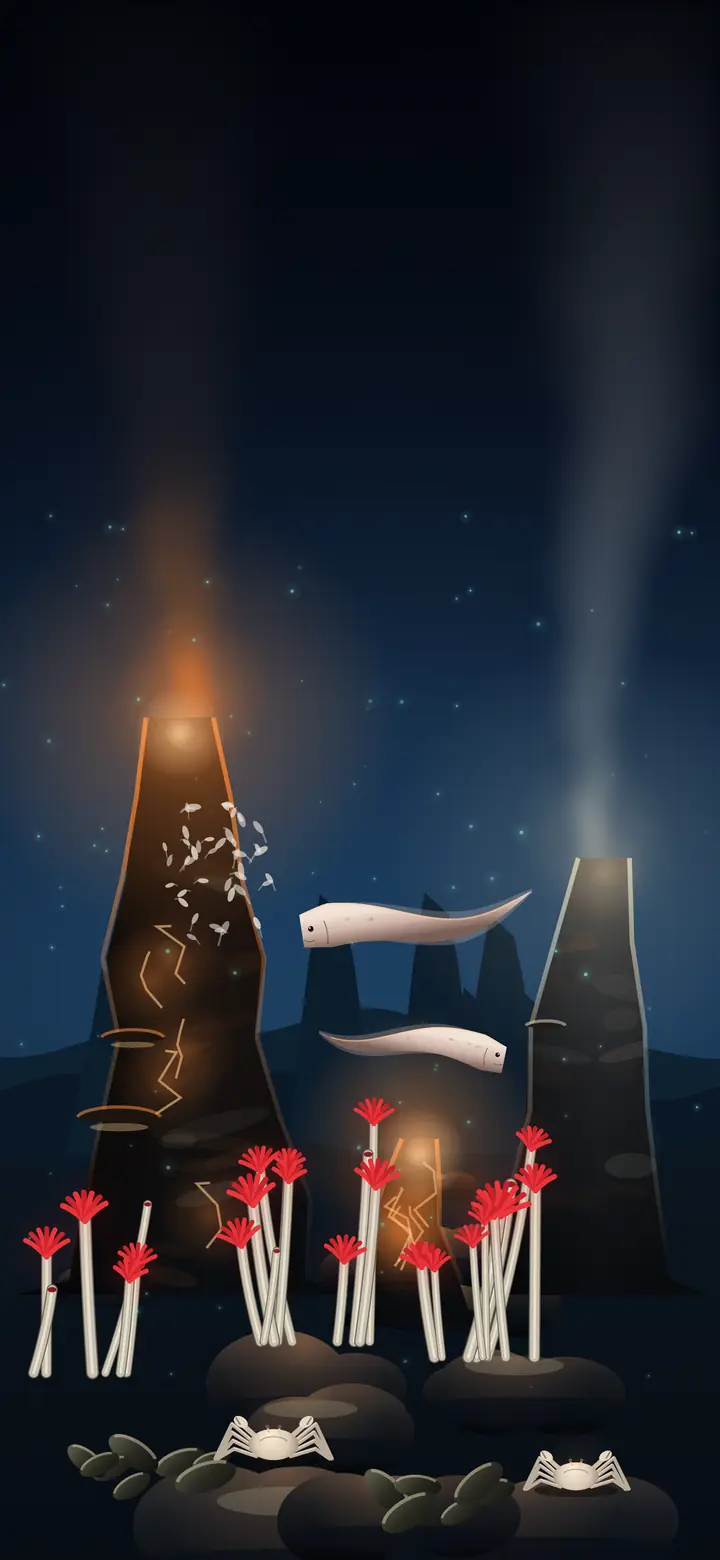
Reading · Sunken Vents
Play it : Reading, Sunken Vents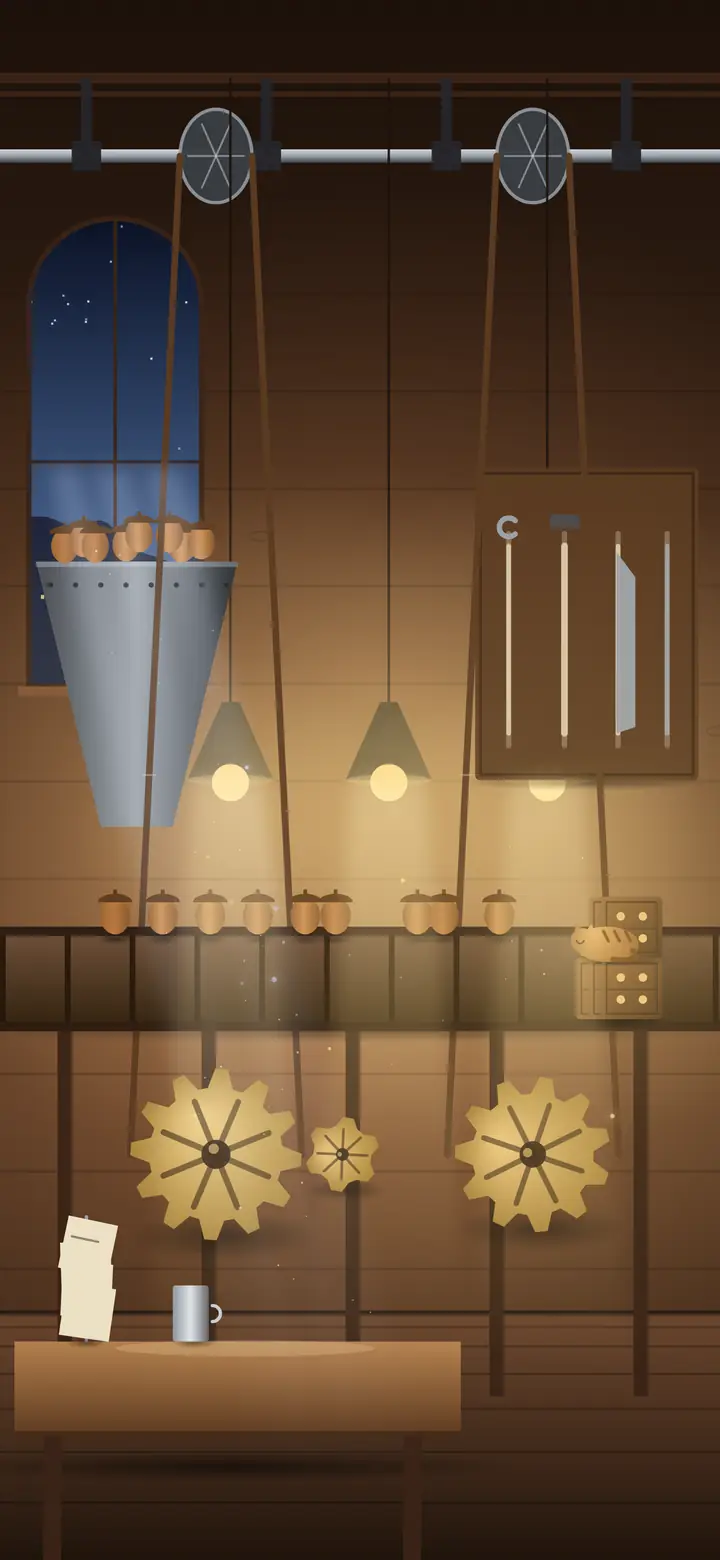
Math · The Tally Works
Play it : Math, The Tally Works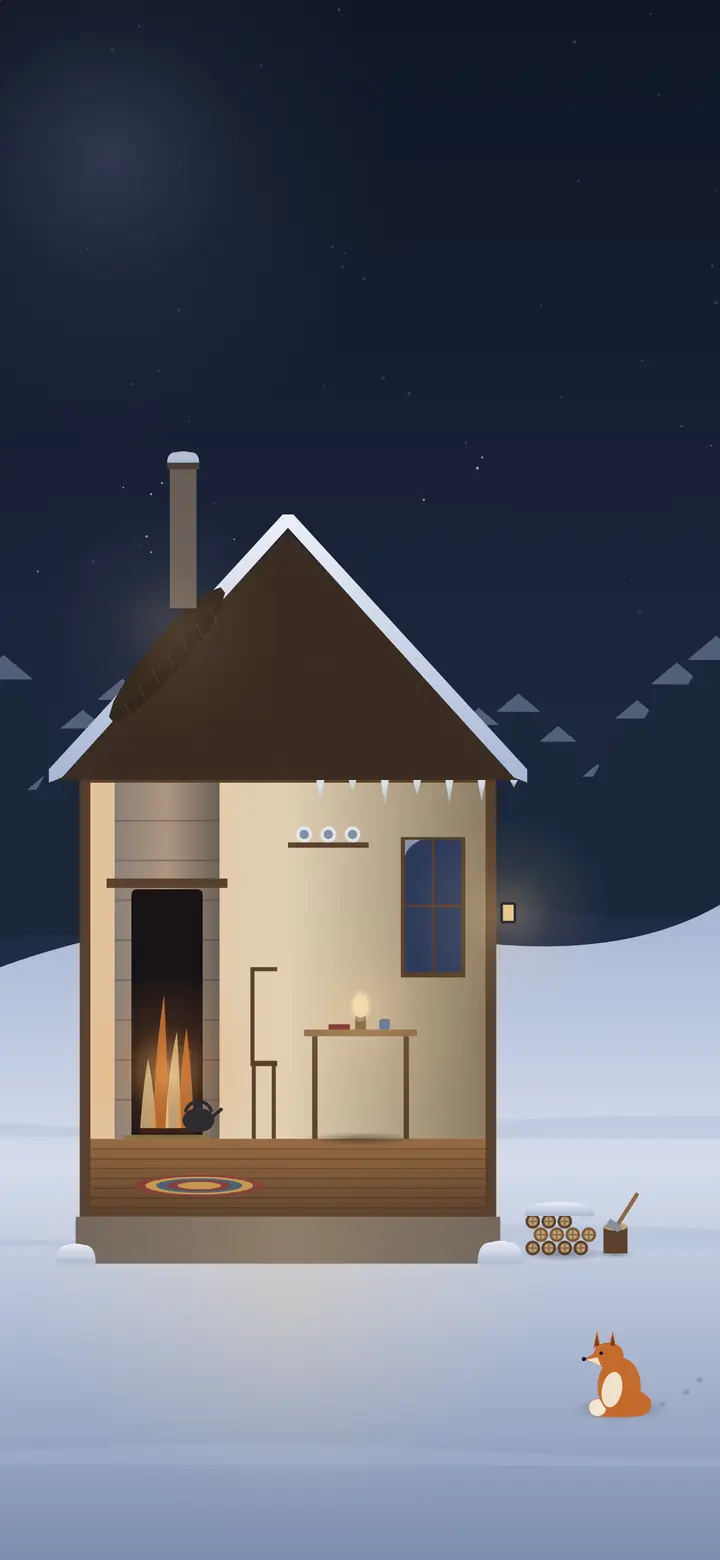
Science · The Ember House
Play it : Science, The Ember House


06 · The tree
The journey is a root. At the end of a grade, it blooms.
A child’s map of their grade is not a board and not a branching tree. It is a single root descending through the dark, with each realm a node along it. Scrolling down is the root extending — the direction the phone already moves and the direction the thing is growing are the same direction, which is the whole reason it stopped feeling busy.
The root, and the bloom
Why the labels never collide, what happens at the surface, and why it is dark down there.
The root winds as it descends and every realm’s name sits on the side the root has just left, so labels can never collide however many realms a grade has. The tree and the path were never two ideas: the path is the tree, the part of it that does the work out of sight.
When the last realm of a grade closes, the root finally reaches the surface and the bloom fires. The sun comes up first, and the tree rises into a lit sky over about eleven seconds, in flower. It is the tree from the child’s very first screen — the same generator, the same wood, the same leaves, a different palette — so the thing they finish with is recognisably the thing they started with.
Nothing advances it. The ceremony holds, the child can scroll it and sit in it for as long as they want, and it can be replayed from the journey afterwards. It is the one payoff in the product that belongs to the whole year rather than to a quest.

The guardrails, visible.
There is no box to type into. A child taps an answer, and a wrong one gets a question back, never the answer.
Why taps, and what is always true
Why there is no box to ask for the answer, and the things that are always true.
Always true, in sage
- It never just hands over the answer — it asks a question back.
- Parents see how their child is getting on — skills and progress, not a transcript of every answer.
- Its record of a child has no place for a name.
- Ask, and a child’s record is deleted — every table, checked.
- No ads, no trackers, no third-party scripts.
Nine checks run on every reading response.
Not filters on the way in. Checks on the way out, against the answer key Archie holds and the passage itself. “Never states the answer” is enforced here, not hoped for. A maths question, with no passage to cite or read as a story, runs seven: every check below except the two marked for reading.
The nine checks
What each check refuses, and what it checks against.
- No answer reveal
The response must not contain the correct option’s text or its letter.
Compared against the item record in the database, not against the prompt. A reply that drifts is caught by code.
- No numeric reveal
On a maths question, the response must not give the answer as a number, in digits or in words.
“Six times five is thirty” names no option and still hands over the answer. This check is what catches it.
- Set-aside options
An option the child has set aside is never named by letter.
Asking about one set-aside option alone could single out the answer, so Archie says “the ones you set aside”, every time.
- Evidence locatable
On a reading question, any paragraph Archie points at has to resolve to a real span in the passage.
A citation that does not resolve fails the check, so “look at paragraph four” cannot refer to a paragraph four that is not there.
- Reasoning grounded
The response has to say something specific about what the child seems to have been thinking — and must not sound more certain than it is.
Archie names its confidence in its own guess. A precise claim made at low confidence fails, and so does encouragement with no hypothesis in it at all. Whether the guess is right is a question for human review; this check enforces an honest one.
- Standard valid
Any standards code cited must exist in the registry.
The registry is seeded from the published New York State documents and the app can only read it. There is no way to write an invented code.
- Read as its kind
On a reading question, an article is questioned as an article, and a story as a story.
A reply that asks about “the main character” of an article, or “the headings” of a story, fails.
- Written for their age
Sentences and words have to fit the child’s grade.
For grades 3–4, no sentence over 22 words and no word over 11 letters; the limits widen as the grades go up. Words from the passage itself are allowed.
- No rehydration leak
The response reaching a reader contains no leftover placeholder tokens.
Catches the failure where a name was scrubbed on the way out and not restored on the way back.
Where the questions come from.
Released New York State assessment material, grades 3–8, in reading and mathematics — parsed into passages and items, each carrying the correct answer the state published. Science and the AI Literacy course are authored to the same format, every wrong answer annotated with what it reveals. An item cannot be served to a child until it has been approved, and the database refuses to approve one with no recorded answer.
How a code is checked
Alignment is a foreign key into a registry checked against the state's own pages.
Alignment is to the Next Generation Learning Standards, and it is a foreign key rather than a label: every code in the registry was checked against the page of the state document it came from, and a code that is not in the registry produces no alignment at all rather than a plausible guess. The counts are below.
By the numbers
Counted against the live database on 2026-09-08. Realms and standards are what the registry holds, not what a child sees at once — a grade sees its own.
Sit with them for the first session.
Family sign-up opens soon; leave an address and we will tell you the day it does. When it opens, it is age gate first, then your consent — a child never creates an account alone.